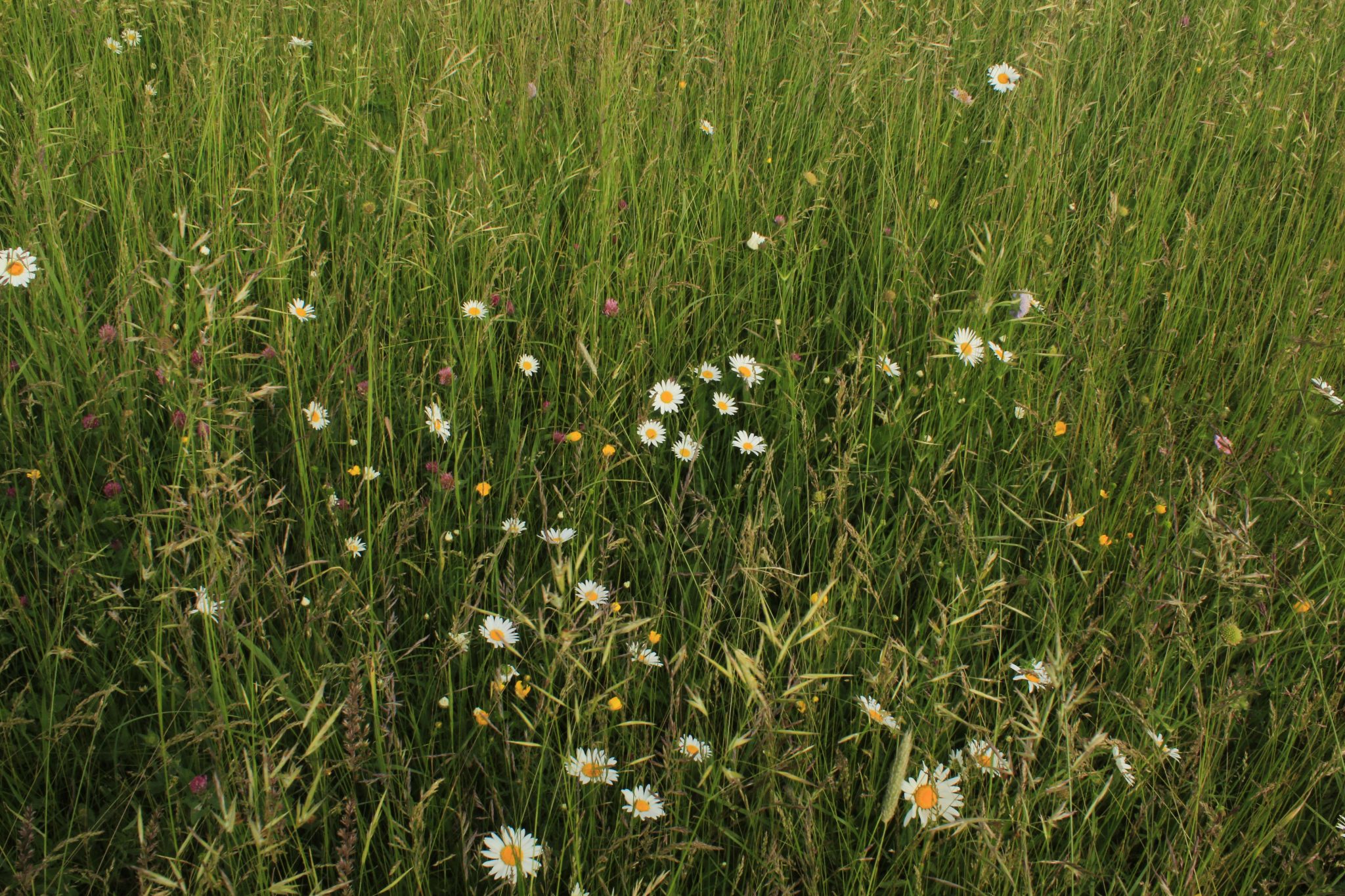
When we first moved to our home in Northumberland, the large paddock that formed part of our property was nothing more than improved grassland, tidy, uniform, and functional, but lacking in character and life. I had always dreamed of creating a wildflower meadow, something that would not only bring beauty and joy but also provide a sanctuary for pollinators and wildlife. That dream took root when I met Kevin Wharf, a wildflower farmer from Windyside Farm in Thropton, Upper Coquet Valley, whose knowledge, passion, and encouragement gave me the confidence to begin.
Planting the seeds – Literally
Kevin supplied me with a carefully chosen seed mix of native Northumberland wildflowers. These weren’t just any seeds; they were tailored to thrive in our soil and climate, ensuring that the meadow would feel at home here as much as we do. Kevin prepared the ground, offering invaluable advice on how to strip back the grass and give the wildflowers the best chance to take hold.
That first year was exciting and a little nerve-wracking. The meadow began to take shape with a scattering of colour and movement, but one key flower was missing: yellow rattle. Known as the “meadow maker,” yellow rattle helps to naturally suppress vigorous grasses, giving wildflowers the space they need to flourish.
By the second summer, the transformation was nothing short of magical. Where there had been hesitation, there was now abundance. Yellow rattle appeared in generous sweeps, unlocking the meadow’s full potential. The grasses softened their dominance, and the wildflowers responded with a symphony of colour. Bees hummed, butterflies danced, and the paddock became alive in a way I had never seen before.
The Magic of the Second Year
For our family, the meadow has been more than a project, it has been a source of joy, learning, and connection. Our cats adore it, chasing flies through the tall grasses, hiding among the flowers, and leaping playfully in the shade. Wild roe deer also visit, grazing peacefully at dawn and sometimes darting gracefully through the flowers at dusk, reminding us that this meadow belongs not only to us but to the wider web of life around us. For me, it has become a place of quiet reflection. My favourite ritual is unrolling my yoga mat at sunset, surrounded by the soft hum of pollinators and the flicker of evening shadows across the swaying grasses. At that golden hour, with the scent of wildflowers in the air, it feels like the world slows down. And later, at the close of summer, when I cut the meadow and let the seeds scatter before baling the hay, the sweet smell drifting through the air is the perfect reward a reminder of the cycle of growth, rest, and renewal.
How to maintain a Wildflower Meadow
Creating a meadow is one thing, but maintaining it is another. Here are the steps I’ve learned (with Kevin’s guidance) to keep it thriving year after year:
- Annual Cut and Remove – Each late summer, after the flowers have set seed, cut the meadow down to around 2–3 inches. Leave the cuttings for a few days so seeds can fall back into the soil, then remove them. This keeps fertility low, which is vital for wildflowers.
- Encourage Yellow Rattle – Once established, this semi-parasitic plant helps reduce grass competition. If it fades, reseed in patches to maintain balance.
- Avoid Fertiliser – Wildflowers prefer poorer soils. Fertiliser encourages grass growth, which quickly overwhelms delicate species.
- Patch Work – If bare spots appear, reseed with locally sourced wildflower mixes. The meadow will evolve naturally over time.
- Enjoy the Seasons – From spring’s first shoots to late summer seed heads, every stage has beauty and value for wildlife.
How to create your own Wildflower Meadow
You don’t need acres of land to create a haven for wildlife, even a small patch in your garden can become a mini meadow. Here’s how to start:
- Choose Your Spot – Pick a sunny area, even if it’s just a few square metres. Wildflowers love the light.
- Prepare the Ground – Remove existing turf or grass to reduce competition. If this isn’t possible, cut the grass very short and scarify the soil so seeds can make contact.
- Select the Right Seed Mix – Source native wildflower seeds suited to your soil type. Local suppliers, like Kevin, ensure the flowers are adapted to your area.
- Sow in Autumn or Spring – Scatter seeds thinly over bare soil, then lightly rake in. Walk over the area to press them down, ensuring contact without burying them deeply.
- Be Patient – Meadows take time to establish. The first year may be patchy, but by the second year, you’ll often see transformation.
- Cut Once a Year – After flowering, cut back and remove clippings to maintain low fertility and encourage more blooms the following year.
Even a small strip of wildflowers can attract bees, butterflies, and other pollinators, creating a little oasis of life in your garden. And if you’re lucky, yellow rattle will arrive to work its quiet magic.
More than a Meadow
What began as an idea for improving a paddock has grown into something much larger. The meadow has given us beauty, a deeper connection to nature, and the satisfaction of knowing we are supporting pollinators and local biodiversity. It has also reminded me that with the right guidance, encouragement, and a little patience, small changes can make a big difference.
Every time I walk through the meadow now, with the cats darting through the flowers, wild roe deer grazing in the twilight, and the air alive with bees and butterflies, I feel grateful, to the land, to Kevin for his advice, and to the wildflowers themselves for showing us what nature can do when we give it space to thrive.